
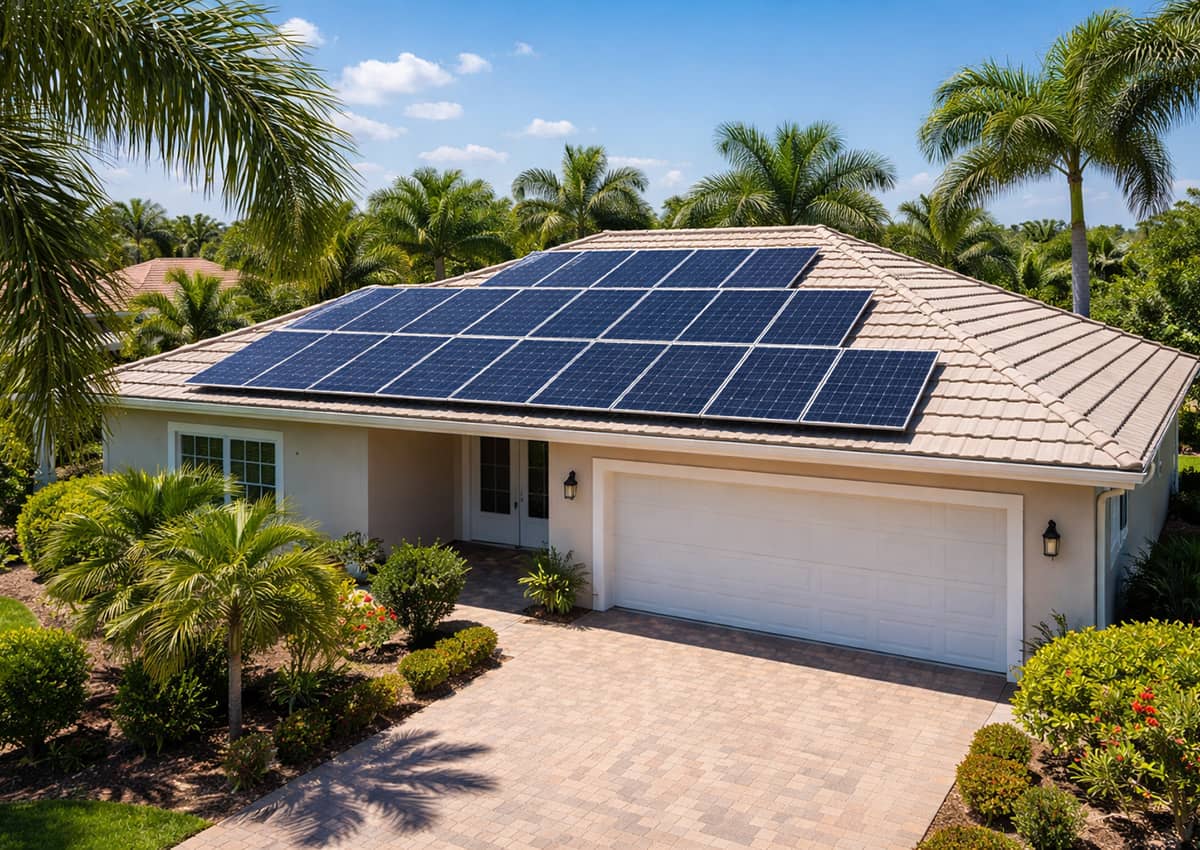
Solar in Buffalo, New York (2026)
Homeowners in Buffalo often wonder whether solar is practical in a city known for lake-effect snow and long winters. The answer depends less on a single snowy month and more on annual production patterns across Western New York.
Determine if you qualify for zero-down solar in Buffalo, New York!
Your data is safe with us.
Key Takeaways
Solar systems are designed using year-round modeling rather than winter-only performance
Cooler temperatures can improve panel efficiency, meaning solar panels in Buffalo often perform more efficiently than in hotter southern climates
Because many homes in Buffalo rely on natural gas for heating, summer air conditioning and general household usage often drive electricity demand
Buffalo residents qualify for the same statewide solar policies available throughout New York
Electricity Costs in Buffalo
Most Buffalo residents receive electric delivery service from National Grid. Supply costs vary depending on the plan selected, but residential electricity rates in Western New York frequently fall in the upper-teen to low-twenty cent range per kilowatt-hour.
Because many homes in Buffalo rely on natural gas for heating, summer air conditioning and general household usage often drive electricity demand. Solar production aligns closely with daytime cooling loads, which can increase the value of generation during peak months.
When evaluating solar in Buffalo, annual usage patterns matter more than short-term seasonal swings.
How Solar Savings Are Calculated Locally
When a rooftop solar system produces more electricity than a home consumes during daylight hours, excess generation flows to the grid. Under New York's structured billing framework, credits are applied according to current utility rules. In many territories, this operates under what is commonly known as the Value of Distributed Energy Resources (VDER) compensation model.
The actual credit value depends on your rate class, system size, and interconnection date. Because tariff structures evolve, accurate savings projections require reviewing current utility documentation rather than relying on generic statewide assumptions.
Rooftop Solar vs Community Solar in Buffalo
Buffalo homeowners generally encounter two practical paths.
One option is installing a rooftop system on the property. This approach allows direct participation in utility export credit structures and long-term production control. It requires roof suitability, permitting, and installation planning.
The other option is community solar participation. Community solar allows residents to subscribe to a shared solar project and receive credits without installing equipment. This pathway is often chosen by renters, residents of multi-unit buildings, or homeowners with shaded roofs. Community solar typically delivers moderate savings compared to rooftop ownership but involves no construction.
The appropriate choice depends on property condition, financial preference, and long-term housing plans.
Snow, Storms & Battery Considerations
Buffalo's winter weather is an important part of the solar discussion. Snow can temporarily reduce output when panels are fully covered, but properly angled systems often shed snow naturally as sunlight returns. Annual production modeling already accounts for seasonal weather variation.
Solar panels alone do not provide power during grid outages because systems automatically shut down for safety reasons. Homeowners interested in maintaining power during winter outages may consider battery storage. A battery can supply selected circuits during interruptions and store daytime production for evening use. Storage is not necessary for solar savings but can increase resilience in regions prone to severe weather.
Incentives That Apply in Buffalo
Buffalo residents qualify for the same statewide solar policies available throughout New York. These include NY-Sun program support administered by New York State Energy Research and Development Authority, the New York State residential income tax credit for owned systems, sales tax exemption on qualifying solar equipment, property tax assessment protections, and utility export credit frameworks.
For homeowners who purchase and own systems, the federal residential solar tax credit expired on December 31, 2025. Third-party ownership structures such as leases or PPAs may still access the federal credit through 2027, claimed by the system owner.
Because NY-Sun operates under a regional block structure, availability depends on program capacity at the time of installation.
Is Solar Worth It in Buffalo?
Solar viability in Buffalo depends on realistic annual production modeling, roof orientation, electricity consumption patterns, and long-term homeownership plans. Despite heavy winter snowfall, Buffalo receives sufficient annual sunlight to support meaningful residential production. Summer generation typically offsets peak usage months, helping balance lower winter output.
Solar should be evaluated using detailed proposals that model year-round performance rather than relying on generalized marketing claims.
Frequently Asked Questions
Estimate your savings in New York
See how much you could save with $0-down solar options.
New York Solar Facts
Avg. Electric Rate
$0.20/kWh
Peak Sun Hours
4.5 hrs/day
State Incentive
NY-Sun program
In This Article
Why Choose Us
Zero Down Financing
Finance your solar system with $0 down and own from day one.
Solar Incentives
Access NY-Sun rebates, state tax credits, and utility export programs.
Screened Contractors
All solar contractors are vetted and certified to serve Buffalo.
No-Cost Quote Comparison
Receive competitive estimates and select your preferred option—zero pressure, no commitments.
Considering Solar in Buffalo?
Homeowners interested in evaluating local solar options should request production modeling specific to Western New York conditions and current utility billing structures.
No pressure. No obligation.