
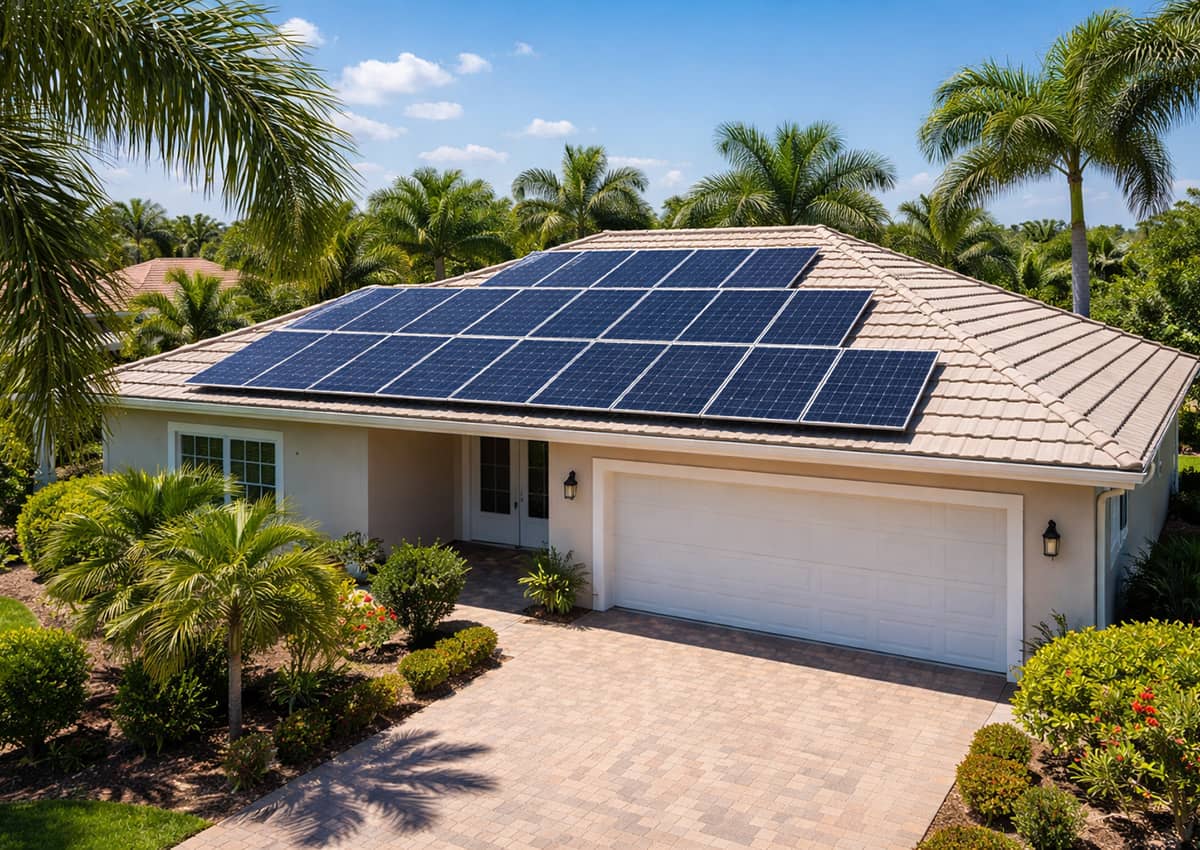
Get "Free" Solar Panels in Syracuse, New York
When Syracuse homeowners search for "free solar panels," they are usually exploring whether solar can be installed without paying a large upfront cost. In 2026, that phrase generally refers to financing structures or community solar participation rather than complimentary equipment.
Syracuse is known for heavy snowfall and long winters, but solar performance is evaluated on annual production rather than peak winter output. Stronger generation in spring and summer typically balances seasonal variation. Modern systems are engineered to account for Central New York weather patterns, including lake-effect conditions and cloud cover.
If you would like to explore what solar options may apply to your home in Syracuse, you can review eligibility below.
Estimate your savings in New York
See how much you could save with $0-down solar options.
New York Solar Facts
Avg. Electric Rate
$0.20/kWh
Peak Sun Hours
4.5 hrs/day
State Incentive
NY-Sun program
In This Article
Solar Conditions in Syracuse
Syracuse receives sufficient yearly sunlight to support residential solar systems despite its reputation for snowfall. While winter production declines due to shorter days and occasional snow accumulation, annual output remains viable when systems are properly sized.
Cooler temperatures can improve panel efficiency compared to hotter climates. Snow may temporarily reduce output when panels are covered, but properly angled installations often shed snow once sunlight returns. Because performance is calculated across twelve months, isolated winter events do not determine overall system viability.
Roof orientation, shading from trees, and structural considerations influence system performance more than seasonal headlines.
Electricity Rates & Utility Context
Most Syracuse households receive electric delivery service from National Grid. Residential electricity bills typically include supply charges, delivery charges, and periodic rate adjustments.
Electricity rates in this region often fall within the upper-teen to low-twenty cent range per kilowatt-hour depending on supplier selection and season. For homes with electric appliances or higher usage levels, annual electricity costs can be substantial.
Solar systems are typically sized based on a full year of historical electricity usage to align generation with actual annual demand.
How Solar Credits Apply in Syracuse
When a rooftop solar system generates more electricity than the home consumes during daylight hours, excess production is exported to the grid. Credits are applied under New York's structured compensation framework, often referred to as the Value of Distributed Energy Resources methodology.
The value of exported energy depends on rate classification, system size, and interconnection timing. Monthly credits may roll forward to offset future electricity consumption, helping balance seasonal differences between summer production and winter usage.
Accurate savings projections require reviewing current National Grid tariff documentation rather than relying on generalized statewide averages.
Rooftop Solar and Community Solar Options
Syracuse residents typically evaluate either rooftop installation or community solar participation.
Rooftop solar allows homeowners to install panels directly on their property and participate in export credit structures. Roof age, orientation, and shading conditions are central to system design.
Community solar offers an alternative for residents who cannot install panels due to roof limitations or rental status. Through a subscription model, households receive bill credits tied to a shared solar facility located elsewhere. This pathway avoids installation and maintenance responsibility but does not involve equipment ownership.
The appropriate route depends on property characteristics and long-term housing plans.
Weather Considerations and Battery Storage
Syracuse experiences significant snowfall and winter weather events. Solar panels automatically disconnect during grid outages for safety reasons, meaning they do not provide power during an outage unless paired with battery storage.
Homeowners interested in maintaining limited power during interruptions may evaluate battery systems. Batteries can store daytime production and supply selected circuits during outages. In Syracuse, battery decisions are typically based on resilience preferences rather than short-term financial return.
Incentives Available in Syracuse
Syracuse residents qualify for statewide New York solar policies. These include NY-Sun program support administered by New York State Energy Research and Development Authority, the New York State residential income tax credit for qualifying owned systems, sales tax exemption on eligible solar equipment, property tax assessment protections, and structured utility export credit rules.
For homeowner-owned systems, the federal residential solar tax credit expired on December 31, 2025. Third-party ownership arrangements such as leases or power purchase agreements may continue accessing the federal credit through 2027, with the provider claiming the benefit.
NY-Sun funding operates under regional capacity blocks, meaning availability depends on current program status.
Does Solar Make Sense in Syracuse?
Solar viability depends on roof suitability, shading conditions, electricity consumption patterns, and long-term residency plans. While winter production is lower than peak summer output, systems are engineered to balance performance across the entire year.
Many households evaluate solar as a long-term hedge against electricity rate increases rather than as a seasonal savings tool.
A realistic evaluation begins with reviewing twelve months of electricity usage alongside current utility tariff structures.
Frequently Asked Questions About Solar in Syracuse
Ready to Explore Solar in Syracuse?
If you are considering solar options in Syracuse, request detailed annual production modeling specific to your roof layout and National Grid rate structure.
No obligation. No pressure.